Top 10 Best Commercial Real Estate Accounting Software of 2026

real estate rental accounting software

However, Dean’s deduction is limited to the business taxable income of $80,000 ($50,000 from Beech Partnership, plus $35,000 from Cedar Partnership, minus $5,000 loss from Dean’s sole proprietorship). Dean carries over $45,000 ($125,000 − $80,000) of the elected section 179 costs to 2025. Dean allocates the carryover amount to the cost of section 179 property placed in service in Dean’s sole proprietorship, and notes that allocation in the books and records.

Tracking Income and Expenses

real estate rental accounting software

As of January 1, 2024, the depreciation reserve account for the GAA is $93,600. The fraction’s numerator is the number of months (including parts of a month) the property is treated as in service during the tax year (applying the applicable convention). You cannot use https://glowtechy.com/why-professional-real-estate-bookkeeping-is-essential-for-your-businesses/ the MACRS percentage tables to determine depreciation for a short tax year. This section discusses the rules for determining the depreciation deduction for property you place in service or dispose of in a short tax year. It also discusses the rules for determining depreciation when you have a short tax year during the recovery period (other than the year the property is placed in service or disposed of). On July 2, 2022, you purchased and placed in service residential rental property.

  • Managing ASC 842 compliance in real estate and CRE portfolios is inherently complex.
  • This encourages timely payments and enhances the tenant-landlord relationship.
  • Free for all core features including banking, automated accounting, rent collection, and reporting; optional paid add-ons for premium services like expedited 1099 filing.
  • Rentec Direct is primarily a property management tool offering general bookkeeping functionality for rental property accounting.
  • This comparison table outlines key features, suitability, and practical use cases, guiding readers to select the most fitting solution for their operational needs.
  • By embedding lease logic directly into the ERP, NetSuite shifts lease management from a back-office chore to a strategic advantage.

Depreciation: A Core Real Estate Tax Strategy

real estate rental accounting software

It streamlines AP/AR processes, bank reconciliations, and tax preparation like 1099 filings, all within an integrated platform. Property managers can generate customizable P&L statements, balance sheets, and owner portals for transparent financial sharing. ResMan is a cloud-based property management platform designed for multifamily, single-family, and commercial real estate, with robust built-in accounting features tailored for investment portfolios. It streamlines rent collection, accounts payable/receivable, general ledger management, bank reconciliations, and investor reporting in a unified system. The software supports scalability for growing portfolios while providing real-time financial insights and compliance tools. Entrata is a cloud-based property management platform with robust accounting features designed for real estate portfolios, especially multifamily properties.

Seamless Bookkeeping for Business Growth: Where Automation Meets Expertise

  • The difference between the two shows your equity and the true health of your real estate investment.
  • It provides tools for online rent collection, maintenance request handling, bank account synchronization, and automated financial reporting optimized for taxes.
  • The primary differentiator is the «Native vs. Integrated» architecture.
  • These tools automate many tasks, such as categorizing transactions and generating reports.
  • Individual real estate investors and small portfolio owners seeking free, automated financial tracking and reporting without complex setup.
  • You must generally depreciate the carryover basis of property acquired in a like-kind exchange or involuntary conversion over the remaining recovery period of the property exchanged or involuntarily converted.

Sandra and Frank must adjust the property’s basis for the casualty loss, so they can no longer use the percentage tables. Their adjusted basis at the end of 2024, before figuring their 2024 depreciation, is $11,464. They figure that amount by subtracting the 2023 MACRS depreciation of $536 and the casualty loss of $3,000 from the unadjusted basis of $15,000. They must now figure their depreciation for 2024 without using the percentage tables. Under this convention, you treat all property placed in service or disposed of during a tax year as placed in service or disposed of real estate bookkeeping at the midpoint of the year.

NetSuite is a unified platform where your leasing operations and your General Ledger live in the same database, providing a single source of truth. NetSuite’s lease accounting feature (within the Fixed Assets Management SuiteApp or via native property layers like RIOO) automates the transition to ASC 842 and IFRS 16. It handles the classification of leases, generates the required amortization schedules for ROU assets and liabilities, and automates the monthly journal entries to keep your balance sheet audit-ready.

Figuring the Deduction for Property Acquired in a Nontaxable Exchange

The platform also offers optional property management services and a unique guarantee for buyer protection. Ready to ensure your new software is set up for maximum tax efficiency and compliance? The right tool is powerful, but professional guidance makes it unstoppable. The team at Allied Tax Advisors specializes in real estate accounting and can help you structure your chart of accounts, identify key deductions, and turn your financial data into a clear strategy for success. Visit us at Allied Tax Advisors to learn how we can help you leverage your technology to build a more profitable portfolio. Real estate rental accounting software simplifies managing rental properties, and this comparison table examines top tools like Stessa, Buildium, AppFolio, Baselane, DoorLoop, and more.

Sage 300 Pricing

A mere passive investor in a trade or business does not actively conduct the trade or business. During the year, you made substantial improvements to the land on which your rubber plant is located. You then check Table B-2 and find your activity, producing rubber products, under asset class 30.1, Manufacture of Rubber Products. Reading the headings and descriptions under asset class 30.1, you find that it does not include land improvements. The land improvements have a 20-year class life and a 15-year recovery period for GDS.

real estate rental accounting software

Automating Commercial & Residential Leasing with NetSuite

The process begins by entering essential lease details directly into the ERP. By capturing data at the source, you ensure that your operational reality matches your financial reporting. Consolidate all of your apps and paperwork in your filing cabinet on TurboTenant. If you need even more from our rental management property software, upgrade to our Premium Plan.

The software also supports portfolio overviews, tax reporting, and tenant tracking to streamline investor accounting without needing QuickBooks expertise. RealPage is a comprehensive property management platform that extends robust solutions to commercial real estate, including lease administration, accounting, revenue management, and maintenance tracking. It integrates data analytics and automation to optimize occupancy, collections, and financial performance across large portfolios. While primarily known for multifamily, its commercial tools like Commercial Revenue Management and LRO provide tailored features for office, retail, and industrial properties. Rent Manager is a versatile property management platform designed for residential, commercial, and mixed-use portfolios, offering robust accounting tools tailored for commercial real estate. It handles lease administration, rent rolls, CAM reconciliations, triple net leases, and financial reporting with automation for invoicing, payments, and general ledger management.

What are Retained Earnings? Guide, Formula, and Examples

the statement of retained earnings reports the

Properly documenting and recording dividend payments is crucial for maintaining transparency and ensuring compliance with accounting standards. Failing to accurately reflect these payments in the statement of retained earnings can result in financial mismanagement and ultimately harm the company’s reputation and credibility. Retained earnings can be used in a variety of ways, such as paying dividends to shareholders or reinvesting earnings back into the business. By looking at the example retained earnings, shareholders can get a sense of how profitable a company has been and how retained earnings can help business owners in the future.

Impact of Net Income and Dividends

Beginning and closing retained earnings are the same as the amount of retained earnings in the period 1 and period 2 of the balance sheet. Mark is an accounting and finance professional with over a decade of experience in public accounting and consulting. As both an accountant and entrepreneur, he is passionate about helping clients strategically organize and grow their businesses to reach their goals.

What Is Net Income and How Is It Calculated in Accounting?

the statement of retained earnings reports the

To compute Retained Earnings  Net retained earnings statement Profit from the Income Statement for the accounting period is taken. Then dividends are deducted (if any) and remaining balance is added the to the Retained Earnings balance on the Balance Sheet. Let us understand how retained income statement is useful for an organization and what it indicated about the financial health of the organization through a couple of examples.

the statement of retained earnings reports the

What Is the Cost of Goods Sold and How Does It Affect Gross Profit?

the statement of retained earnings reports the

By analyzing trends in Restaurant Cash Flow Management retained earnings, investors can gain insight into the company’s financial health and future prospects. If retained earnings are reported to be increasing steadily over several periods, it may indicate that the company is consistently generating profits and reinvesting in its growth. On the other hand, if retained earnings would fluctuate or decline, it could signal financial instability or poor performance. For example, if a company has negative retained earnings, it means the company has incurred losses in the past that have not been recovered through profits.

the statement of retained earnings reports the

It’s the springboard for the period’s financial narrative and reflects the previous period’s endgame. For those who’ve been in the financial reporting game, this familiar number is your last performance’s curtain call, carried forward as the opening act for the new period. If this is your debut statement, then you’re starting from scratch—your opening balance is zero. Your retained earnings can thus be seen as the reserves for future strategy plays or a cushion for financial hiccups.

the statement of retained earnings reports the

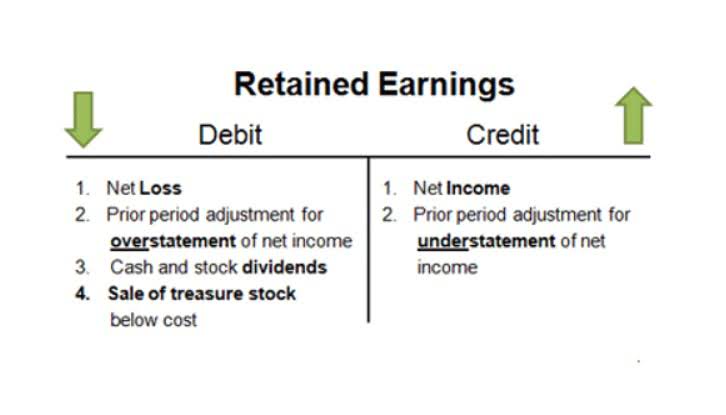
In combination, these statements reconcile performance, cash activity, and financial position into a cohesive financial picture. It’s part of shareholder’s equity and tracks how much profit the company has kept (rather than paid out as dividends). Over time, it shows the company’s accumulated profits that are reinvested in the business. Subtract any dividends paid to shareholders during this period from the retained earnings. Dividends are distributions of the company’s profits to its shareholders, decreasing the retained earnings balance. Retained earnings can be found by taking the beginning retained earnings amount, adding the net income earned during the period, and subtracting any dividends paid out to shareholders.

  • This article explores the definition, importance, and components of the statement of retained earnings, as well as its role in business financial reporting.
  • Also known as the Statement of Owner’s Equity, Equity Statement, or Statement of Shareholders’ Equity, this statement is created in accordance with generally accepted accounting principles (GAAP).
  • Since GAAP is so widespread, reporting according to its standards provides you ample opportunity to analyze how you stack up against similar companies.
  • At the same time, those rules are not so rigid as to preclude variations in the exact structure or layout.
  • When profits remain within the business, they add to the total stockholder equity.

Overlooking the Link Between Net Income and Retained Earnings

Understanding the statement of retained earnings is like comprehending the roots of a towering oak tree. Just as roots anchor the tree, absorb nutrients from the soil, and sustain its growth, retained earnings form the foundation of a company’s financial stability and future prospects. Distribution of dividends to shareholders can be in the form of cash or stock. Cash dividends represent a cash outflow and are recorded as reductions in the cash account. These reduce the size of a company’s balance sheet and asset value as the company no longer owns part of its liquid assets. Retained earnings represent a useful link between the income statement and the balance sheet, as they are recorded under shareholders’ equity, which connects the two statements.

  • One thing to keep in mind when analyzing companies is the intention behind capital allocation.
  • This document reveals essential information about how a company has utilized its profits by retaining some for future investments or distributing them as dividends.
  • That specific moment is the close of business on the date of the balance sheet.
  • Contrary to common misconceptions, retained earnings are not a pool of cash but an expression of how much of the company’s earnings have been reinvested in the business or kept as a reserve.
  • As a key indicator of a company’s financial performance over time, retained earnings are important to investors in gauging a company’s financial health.

Adding Net Income and Deducting Dividends Paid

In that case, the company may choose not to issue it as a separate form, but simply add it to the balance sheet. It’s also sometimes called bookkeeping the statement of shareholders’ equity or the statement of owner’s equity, depending on the business structure. Thanks to GAAP, there are four basic financial statements everyone must prepare . The financial statement that reflects a company’s profitability is the income statement. The statement of retained earnings – also called statement of owners equity shows the change in retained earnings between the beginning and end of a period (e.g. a month or a year). The statement of cash flows shows the cash inflows and outflows for a company over a period of time.

Contribution Analysis Overview, Formula, Pros Cons

Once the contribution has been calculated, you can use this amount to calculate the break-even point, which will tell you how many units you need to produce in order to make a profit or loss. It’s possible to calculate contribution per unit, or for the total number of units that are expected to sell. The running costs, on the other hand, are business overheads that are not directly attributed to the sale.

A contribution is any voluntary transfer of money, goods, or services to a nonprofit without expecting anything of equal value in return. We can’t recommend any of the products and/or services featured on the site. An accountant can assist firms in optimizing total profit in a competitive market, so you should consider hiring one. Hiring a professional accountant is necessary for correctly calculating and analysing contributions. Contributions are essential in determining profitability and making sound accounting decisions.

The total contribution can be calculated by multiplying the contribution per unit by the number of units sold. Once the contribution margin has been calculated, it can be used to calculate the contribution per unit. The price at which a product is sold to clients https://westcoastgames.net/accounting-worksheet-guide-pdf-finance-money/ is the selling price per unit. The contribution margin ratio is the contribution margin as a part of sales.

  • This involves recognizing all costs related to revenues (and revenues themselves) in the same period.
  • The closer a contribution margin percent, or ratio, is to 100%, the better.
  • In Cost-Volume-Profit Analysis, where it simplifies calculation of net income and, especially, break-even analysis.
  • Gross profit subtracts cost of goods sold, which may include both variable and fixed production costs depending on the costing method used.
  • A higher contribution margin generally indicates more flexibility to cover fixed costs and achieve greater profitability.
  • The contribution margin formula you need is slightly different for each type.

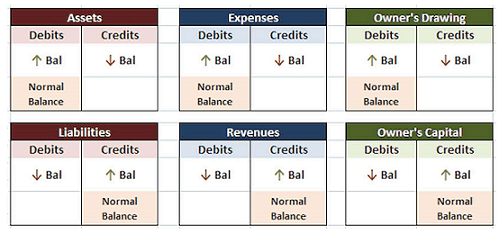
Access and download collection of free Templates to help power your productivity and performance. This is, therefore, a very crucial procedure or tool to manage the growth of a business. For example, take a business owner who invests $5,000 in their soap-making business. The owner’s capital account is also credited to reflect their increase in equity. When an owner makes a contribution, the corresponding asset account (e.g., cash or equipment) is debited.

This then contributes to the fixed costs, and goes towards the profit of the business. This will show how many units you need to sell to cover the fixed costs, thus making neither a profit or a loss. Once the fixed costs are paid off, any further contribution goes towards profit. To calculate contribution per unit, you use the sales price per unit, minus variable cost per unit. It also takes into account all the expenses of running the business, including both variable and fixed costs.

Nonprofit contributions aren’t limited to donations from individual donors. However, the contribution doesn’t impact the income statement, as a contribution isn’t considered revenue. Their contribution will appear on the balance sheet as it changes the business’s total assets and owner equity.

CIMA P1 Syllabus A. Cost Accounting For Decision And Control – The Concept Of Contribution – Notes 3 / 10

This knowledge can be used to drive down fixed costs or increase the contribution margin on product sales, thereby fine-tuning profits. It is a method of breaking down the financial performance of a product or service and analysing its contribution towards covering the fixed costs of the business and generating a profit. Profit takes into account total revenue minus all a business’s expenses, while contribution margin only subtracts variable costs from revenue. Contribution subtracts only direct or variable costs from revenue, focusing on how sales support fixed costs and profit. «Contribution» represents the portion of sales revenue that is contribution definition in accounting not consumed by variable costs and so contributes to the coverage of fixed costs.

Contribution margin as a measure of efficiency in the operating room

Gross margin is calculated by deducting COGS from revenue and dividing the result by revenue. They aim to raise funds to provide educational resources, tutoring, and extracurricular activities for the children in the community. Let’s consider an example of a contribution in the context of a charitable donation. In summary, a contribution is a general term that can refer to various types of voluntary offerings, such as money, goods, services, or efforts, provided in support of a cause, organization, or individual.

To calculate the contribution margin for each of the products your business sells, you subtract the variable costs related to the specific product from the revenue it generates. The contribution margin is a financial metric that measures the amount of money a company has to cover its fixed costs and generate profit from its sales. In other words, the contribution margin is the difference between the selling price and total variable costs for different products or services. In contrast, high fixed costs relative to variable costs tend to require a business to generate a high contribution margin in order to sustain successful operations.

Contribution approach definition

Marginal costing is an alternative method of costing to absorption costing. Add contribution to one of your lists below, or create a new one. To add contribution to a word list please sign up or log in.

How Important is Contribution Margin in Business?

We work with clients that are sole traders as well as multinational corporations and 7-figure businesses. We are a multinational business with offices in Asia, Africa, North America, Europe. By understanding how to properly journal and record events, businesses can keep track of their finances and make informed decisions about future growth. Gain unlimited access to more than 250 productivity Templates, CFI’s full course catalog and accredited Certification Programs, hundreds of resources, expert reviews and support, the chance to work with real-world finance and research tools, and more. Take your learning and productivity to the next level with our Premium Templates.

Contribution Margin

In the latter case, the par value of the shares sold is recorded in the common stock account and any excess payments are recorded in the additional paid-in capital account. It can be a separate account within the stockholders’ equity section of the balance sheet, or it can be split between an additional paid-in capital account and a common stock account. Contributed capital is reported on the balance sheet under the shareholders’ equity section. Essentially, contributed capital includes both the par value of share capital (common stock) and the value above par value (additional paid-in capital). Par value indicates the minimum value at which a company may sell its shares to investors.

Discover the significance of contribution in accounting in the UK. Whichever presentation approach is used, a company should be consistent in using the same form of presentation for all periods included in the financial statements. The main advantage of the contribution approach is that it clearly identifies and segregates all variable expenses in one place.

  • Aplos has everything you need in one place for streamlined nonprofit and church management.
  • Properly accounting for contributions ensures that a company’s financial statements accurately reflect its resources and commitments.
  • Total profit remains the same, but by calculating individual product contributions we can see that each product makes a contribution towards total fixed costs.
  • This then contributes to the fixed costs, and goes towards the profit of the business.
  • If the contribution margin at a particular price point is excessively low or negative, it would be unwise to continue selling a product at that price.
  • Calculating the contribution margin allows you to see how much revenue each product earns.
  • Contribution is a fundamental term in business and finance that helps organizations understand the profitability of their products or services.

Calculating the contribution margin allows you to see how much revenue each product earns. Understanding and effectively utilizing contribution analysis enables companies to improve profitability and achieve financial stability. If Product A has a contribution margin of 40% and Product B has a contribution margin of 20%, the company might prioritize Product A to maximize profitability. Products with higher contribution margins are generally more profitable and may receive more focus in terms of marketing and production. Companies use contribution to analyze the profitability of different products or services. The contribution margin is a related concept that shows the contribution as a percentage of sales revenue.

However, it should be dropped if contribution margin is negative because the company would suffer from every unit it produces. This cost of machine represents a fixed cost (and not a variable cost) as its charges do not increase based on the units produced. If the contribution margin at a particular price point is excessively low or negative, it would be unwise to continue selling a product at that price. The contribution margin is not intended to be an all-encompassing measure of a company’s profitability. The contribution margin calculates the profitability for individual items that the company manufactures and sells.

A fixed cost is any cost that is incurred in the same amount, irrespective of changes in transaction volume. A low contribution margin may be entirely acceptable, as long as it requires little or no processing time by the bottleneck operation. The key difference is that contributed capital reflects external shareholder investment, while earned capital reflects internally generated profits. Contributed capital represents the funds shareholders invest directly into a company by purchasing stock, either at par value or above it. Despite the name, contributed capital does not refer in any way to funds contributed to a nonprofit entity.

For example, software companies tend to have much higher contribution margins than retail or manufacturing businesses. What businesses consider a «good» contribution margin percentage will vary from industry to industry, and even from business to business. Businesses use their contribution margin to inform several important internal strategic business decisions.

Bookkeeping software Best software for small business bookkeeping

books zoho

Add cost and revenue budgets in your project to analyze estimated and actual income earned or expenses incurred. Additionally, set budgets for tasks, staff, or total hours spent. Generate comprehensive Budget vs Actuals reports for evaluating projects. Avoid stockouts by setting reorder points and receiving alerts before stock levels dip.

books zoho

Form 1099 e-filing & W-9 Management

books zoho

The retained amount is tracked separately, ensuring transparency until the contract terms are fulfilled. Efficient is the word that perfectly sums up our experience with Zoho Books. With Zoho Finance suite of products, we could save time, money and retain customer satisfaction to post a 20% YoY revenue growth. The e-invoicing mandate and its implications on your business. Discover how Zoho Books can simplify your transition to the new e-invoicing processes.

books zoho

What language does Zoho Books support?

books zoho

It’s a single secure location to keep up withyour company’s bills and invoices, reconcile your bank statements, control your spending,oversee projects, and eliminate compliance worries. Get actionable insights on your cash flow, taxes, profit and loss, and sales on demand. Opt to get selected reports periodically sent to yourself and your team. Send project quotes quickly, accommodate partial payments, and log time. Bill for resources, job completions, time spent, or expenses attached to a project. Zoho Books integrates with multiple payment gateways to let you collect payments online, hassle-free.

HR tools

books zoho

Zoho Books offers a forever free plan for businesses looking to QuickBooks start with online accounting. Stay on top of your finances with essential features at zero cost. Opt to get select reports periodically sent to you and your team. Bill for resources, job completions, time spent, or expenses attached to a project, too. We understand that accounting software is always evolving. That’s why at Tech.co, we have full-time product researchers to re-run this testing process regularly.

  • The platform also excels at playing nice with other apps and services you may rely on.
  • Track all transactions and changes on Zoho Books with the tamper-proof audit trail feature.
  • Compare trends across different periods or divisions in the business financial reports instantly.
  • Popular workflows to trigger with your manual journal include email alerts, in-app notifications, or field updates, but you can set up your own custom actions as well.
  • I created a sales order, converted it to an invoice with one click and was able to immediately convert a sales order into a purchase order when inventory ran low.
  • Not all of the issues with Zoho Books can be chalked up to the complexities inherent to accounting tools.

Supported Browsers

books zoho

You can upload any document like receipts and attach them to transactions like expenses or bills. Zoho Books is cloud-based smart accounting software which takes care of all your accounting needs. To fully Payroll Taxes understand how Zoho Books works, go through modules below in the given order.

  • Zoho Books enables your customers to withhold a portion of the invoice amount based on an agreed retention rate.
  • No other accounting platform offered as much mobile functionality.
  • No, Zoho Books does not include a built-in payroll processing feature, However, it does integrate with Zoho Payroll and other third-party apps to manage payroll processing.
  • Personalize and customize invoice templates to reflect your brand by adding your logo, colors etc.
  • Select a language for your interface based on your business location.
  • Leverage the project profitability report to identify high-profit projects and optimize resource allocation for improved efficiency and profitability.

Accounting for Technology Companies Compass Accounting

accounting for tech companies

Save time with automated accounting—ideal for individuals https://www.bookstime.com/ and small businesses. Businesses can balance talent retention with financial stability by carefully managing stock-based compensation. Stock-based compensation, such as Enterprise Management Incentive (EMI) schemes and grants, is a powerful tool for attracting and retaining top talent.

How Tech Companies Account for Intellectual Property Assets: Amortization Explained

  • According to the Financial Accounting Standards Board (FASB) ASC 606, revenue must be recognized when control of goods or services is transferred to customers.
  • Accounting for technology companies involves unique challenges and opportunities.
  • Get in touch and we’ll reach out to you to schedule a video call to better understand your tech startups needs and prepare a custom quote.
  • Even among those that do have at least one, the applications they use are almost entirely cloud-based.

ML&R’s experienced CPAs and advisors possess specialized expertise in managing the complex issues that technology companies face. Our collaborative approach offers a deeper level of service that goes beyond simple accounting for technology companies. Key Performance Indicators (KPIs) play a crucial role in accounting for tech startups. These accounting metrics help track the financial health of a startup company and measure its performance against predetermined benchmarks.

accounting for tech companies

What Makes Software Company Accounting Unique?

accounting for tech companies

Customer acquisition cost (CAC) is a crucial financial metric that tech startups should monitor. Startups often face complex financial scenarios such as capitalizing software development costs, managing investments in technology, and navigating venture capital financing. A tech accountant brings specialized knowledge that helps startups understand and differentiate between R&D expenses and capital expenditures, aiding in more accurate budgeting and financial forecasting. With their insights, a startup can normal balance position itself for sustainable growth and investor confidence. Focus on metrics that provide insights into your growth, profitability, and sustainability.

Elevate Your Technology Projects With Expert Financial Management

Tech companies operate in a dynamic and fast-paced environment where efficient financial management is crucial for success. AccountsGPT by Gaper is the ideal AI-driven solution for streamlining accounting processes in tech businesses. From automating complex financial tasks to delivering actionable insights, AccountsGPT empowers tech companies to maintain accounting for tech companies accuracy, ensure compliance, and focus on innovation. When it comes to handling accounting activities, startups often find themselves weighing the pros and cons of maintaining an in-house accounting team versus outsourcing to third-party firms.

accounting for tech companies

How should stock-based compensation be accounted for in tech startups?

Clear, consistent financial reporting builds trust and demonstrates your startup’s potential. Look for accounting firms or professionals with a proven track record of working with tech startups. Check for industry-specific experience, client testimonials, and a clear understanding of the challenges tech companies face.

accounting for tech companies

Benefits Of Using Digital Tools And Software

Automating your revenue recognition process can streamline this and provide real-time insights into your financial performance. Implementing a system for real-time KPI tracking allows you to make informed decisions quickly and adapt to changing market conditions. This can be especially valuable for software companies, where rapid growth and constant innovation are the norm. Consider exploring tools and software that can provide up-to-the-minute insights into your financial performance.

  • All of these distinctions, as well as many others which we’ll explore in this article, demand that tech companies work with an accounting partner that understands their business and the wider industry.
  • Solid accounting and accurate financial statements are critical for technology businesses to obtain the financing or investment you need or to secure the exit you want.
  • Our ability to anticipate hurdles and address them before they become major roadblocks also provides measurable value for our customers.
  • You’re pouring your heart and soul into building the next big thing in tech.
  • For instance, software revenue should be recognised monthly as the software is used under SaaS (Software as a Service) pricing plans.
  • It’s essential to ensure your chosen method complies with all relevant accounting standards and provides a consistent and accurate view of your financial performance.
  • From revenue recognition and R&D capitalization to managing cloud computing costs and stock-based compensation, each practice plays a vital role in accurate reporting and strategic decision-making.

Track Essential KPIs for Financial Health

From the tax implications of stock options to compliance with industry-specific regulations, staying on top of everything can be a full-time job. Failing to comply can lead to penalties and legal issues, so it’s crucial to have a clear understanding of the rules and how they apply to your business. Experienced accounting professionals can provide the support you need to stay compliant and avoid costly mistakes. Look for a firm that specializes in working with tech companies in California. Monthly Recurring Revenue (MRR) is a key indicator of financial status for many tech businesses including software companies, reflecting predictable revenue from subscriptions. This metric helps in assessing the company’s revenue stability and growth potential.

Our team of specialist tech accountants offers continuous support and advice tailored to the technology sector. Whether it’s scaling your operations, entering new markets, or financial forecasting, we are here to guide you every step of the way. Navigating the tax landscape can be particularly challenging for tech companies, which may qualify for various tax reliefs and incentives designed to support innovation. Passman Leonard’s tax planning services are tailored to your business, so you will benefit to the fullest. From R&D tax credits to specific tech startup tax reliefs, our accountants ensure you gain maximum advantage, thereby improving your bottom line and fuelling further innovation. In the rapidly evolving tech industry, the right accounting support can mean the difference between merely surviving and truly thriving.

accounting for tech companies

Other Considerations When Looking Into Tech Company’s Accounting

Companies like PwC offer guides and tools to streamline this process, enhancing both compliance and financial reporting clarity. Additionally, monthly recurring revenue is a vital KPI for predicting financial stability and informing business decisions. For example, understanding your CAC can help you optimize your marketing spend and acquire customers more efficiently. Regularly reviewing your financial reports with your accounting team can uncover trends and opportunities you might otherwise miss. In-house accounting gives you more direct control over your financial processes and data. However, building an in-house team means salaries, benefits, office space, and software—significant expenses, especially for early-stage companies.